Rakuten Securities Data Breach: 4.47 Million Customers Impacted, Sensitive Financial Data Exposed
The financial industry has been rocked by another massive data breach. Rakuten Securities is under intense scrutiny after announcing that highly sensitive personal data belonging to millions of its customers was exposed due to unauthorized third-party access.
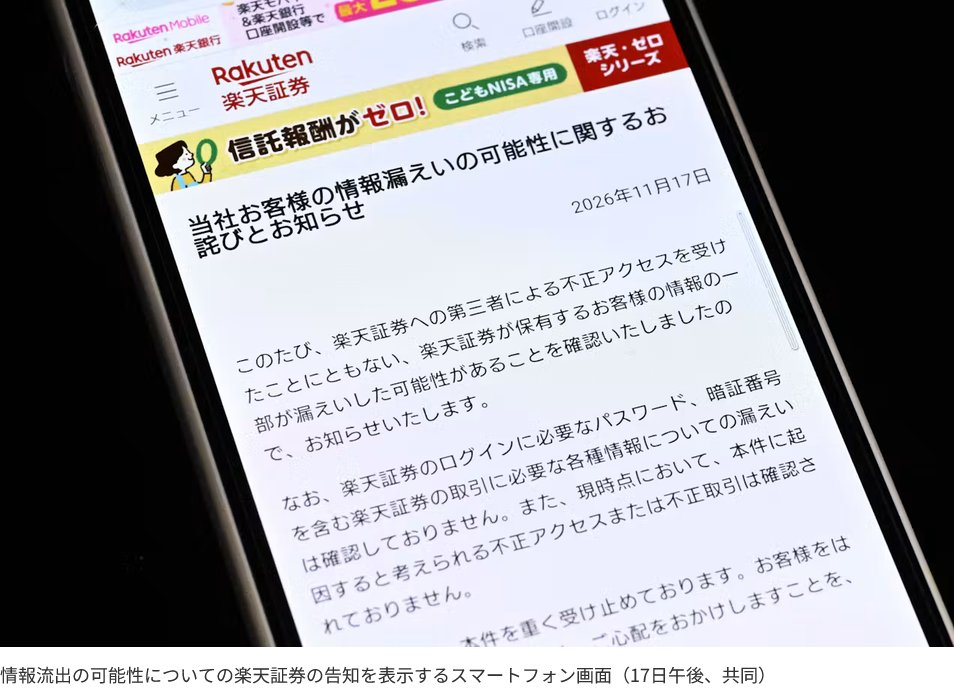
On November 17, 2026, Rakuten Securities officially confirmed a severe data breach. Unauthorized access resulted in the exposure of personal information for approximately 4.47 million customer accounts. What makes this incident particularly alarming is the highly sensitive nature of the financial data that was compromised.
According to the official statement, the leaked data extends far beyond basic contact information. While names, addresses, dates of birth, employers, and phone numbers were exposed, the breach also compromised annual income data, self-reported financial assets, details of financial products held, and bank account numbers used for withdrawals.
Furthermore, in the same incident, Rakuten Securities confirmed that login IDs and customer codes for approximately 11.25 million other accounts were also leaked. The combination of personal identities, detailed financial profiles, and login credentials creates a "complete toolkit" for cybercriminals to execute highly convincing and targeted attacks.
Direct Impact on the Stock Market
Trust is the ultimate currency in the financial sector. When millions of customers learn that their income and asset data have been compromised, a market backlash is inevitable.
The immediate impact was felt on the stock market. Shares of the parent company, Rakuten Group, plummeted to a three-year low. The data breach at its securities unit has dealt a heavy blow to investor confidence, as the market questions the company's cybersecurity risk management.
A Familiar Pattern: The Third-Party Risk
The incident at Rakuten Securities is not an isolated case. Recently, there has been a string of data breaches targeting major financial institutions, ranging from traditional banks to securities platforms.
The pattern is often the same: a company's core systems might be secure, but the vulnerability stems from unauthorized access through vendors, partners, or third-party services connected to their ecosystem. This underscores a harsh reality of modern digital architecture: a company's security is only as strong as its weakest link in the supply chain.
Cybercriminals are also becoming increasingly sophisticated. They are leveraging automation and AI to chain together minor vulnerabilities into a massive exploit capable of breaching the defenses of financial institutions.
Mitigation Strategies for Institutions and Users
- For Financial Institutions: Comprehensive security audits of all third-party vendors are mandatory. Implement strict least privilege access controls and robust data encryption. Never underestimate the importance of regular patching on supporting infrastructure.
- Rapid Incident Response: Companies must be transparent and prompt in notifying customers of a breach. Delaying the announcement only amplifies reputational and financial damage.
- For Users: Exercise extreme caution. If you receive emails, text messages, or calls that mention your name, employer, and specific asset details, do not trust them immediately. This is a targeted phishing tactic exploiting leaked data. Always enable Two-Factor Authentication (2FA) and update your passwords regularly.
- Monitor Your Accounts: For customers whose bank account numbers were exposed, continuously monitor your bank statements and immediately contact your bank if you notice any suspicious activity.
The Bottom Line
The Rakuten Securities case is a harsh wake-up call for the global financial industry. Data such as annual income and financial assets are among the most private information a person holds. When the institutions trusted to guard this data fail to protect it, the last line of defense is the digital literacy of the users themselves. Never share your OTPs, and always verify any communication claiming to be from your financial service provider.
Artikel Terverifikasi
Artikel ini terdaftar resmi di Data Cyber Indonesia.
DCY-ART-2026-313
Verifikasi keaslian →